
How to Create a New Language for Your OC’s World!

Ah, languages! Let’s be realistic; making a whole new language isn’t easy. While this article will discuss and give resources for budding conlang students (conlang being a portmanteau of ‘constructed language’), it will also present much easier solutions to depicting multiple languages in your writing, along with creating a cipher or substitution language for your visual works. So, let’s get into it!
Language has likely existed since the birth of humanity, and most (but not all) language systems in the world also have accompanying written language. Some languages are (or were) only verbal or visual, while language systems like braille were designed to allow the visually impaired to read easily through touch.
When you’re planning to create a language, I suggest you go through this checklist.
- Why do you need another language in your work?
- What are you using it for?
- What medium are you creating your work? (Comic, fiction writing, maybe even a podcast!)
- How much effort are you willing to put into creating a language?
- Are you willing to study languages to make sure you get it right?
After going through this checklist, you’ll know roughly what you want from both a language in your OC’s world and this article. I’ll be covering language or word substitution, ciphers, and finally proper conlangs, so I suggest you start on the section that interests you the most.
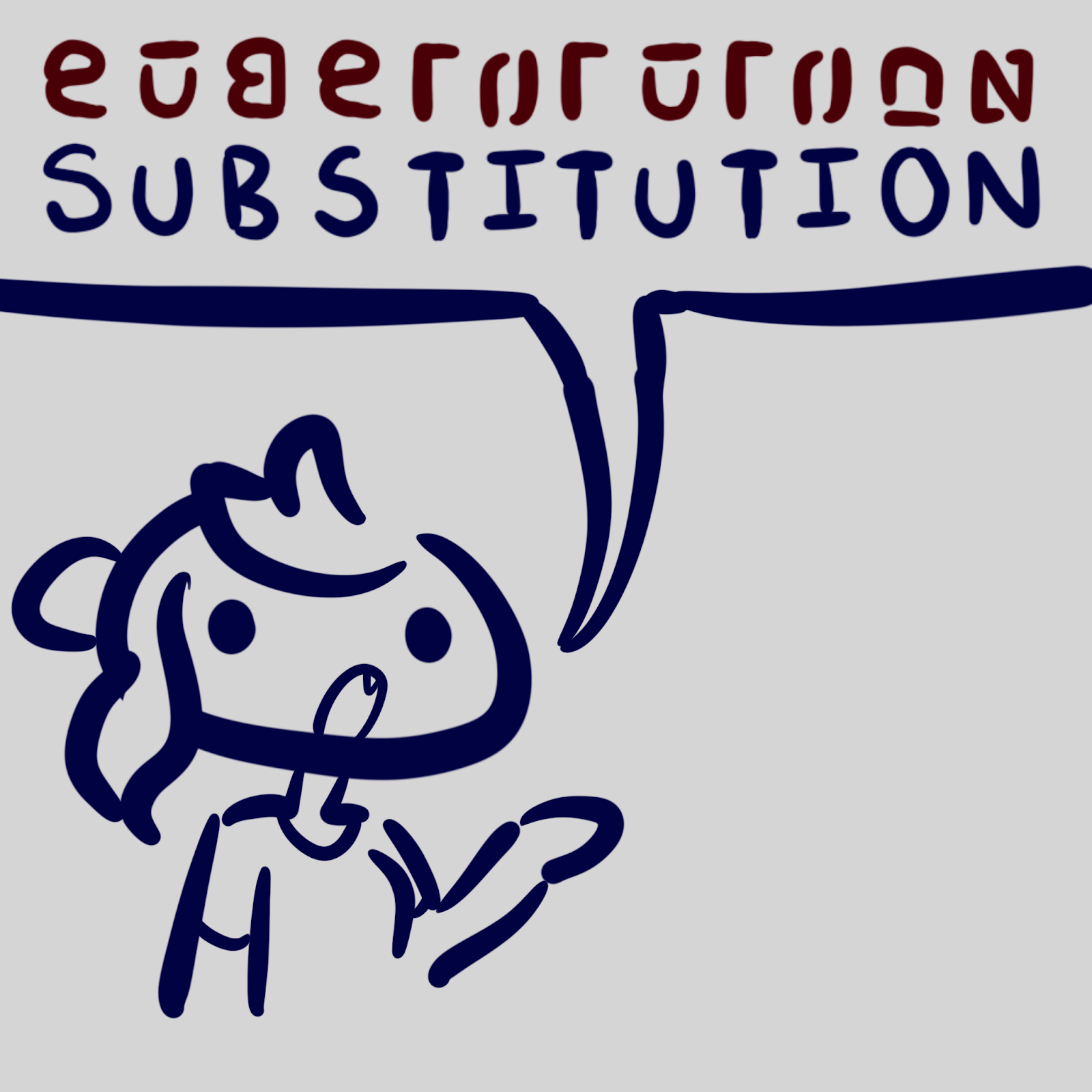
Substitution of words or languages.
Language or Word Substitution
Have you ever read a novel or story in a fictional world in your native language and suddenly come across a foreign language in the story? In some cases it can be meant to represent another language in the world. It’s simply one of the easiest ways to depict another language in your story, especially if your setting has parallels to real life cultures or societies. However, it’s always best to be careful with what you might be saying about speakers of a specific language with your world’s depiction. Be cautious with how your readers might interpret your choices.
If you’re creating a world and only need to throw in a word or two of a fictional language, the thing you want to do is a simple word substitution. Make up a word for your fictional language and mention what it means; bam, you’ve sorted it out. In cases where characters are speaking the language but you want to directly translate it to the language you’re writing in (in my case, English), the solution is to use italics on the text.
Using English as an example here; if you choose to represent your fictional language through italicized English, you also avoid the issue of having to translate other languages to English for your English readers, and the issue of bilingual readers being able to read the ‘fictional language’ anyways.
These issues tend to come hand-in-hand especially if you don’t actually speak the language(s) you used. A native speaker will easily notice if your English translation of say, Spanish, is incorrect. Even if the incorrect Spanish text is supposed to be a stand-in for your fictional language, it will still bother your Spanish-speaking readers. Even if your reader can’t understand the language you used, you still need to spend extra time translating for them, so I recommend using the italics method with a few substitution words to make things the smoothest for you and your readers.
It says ‘ciphers’, Solar.
Ciphers
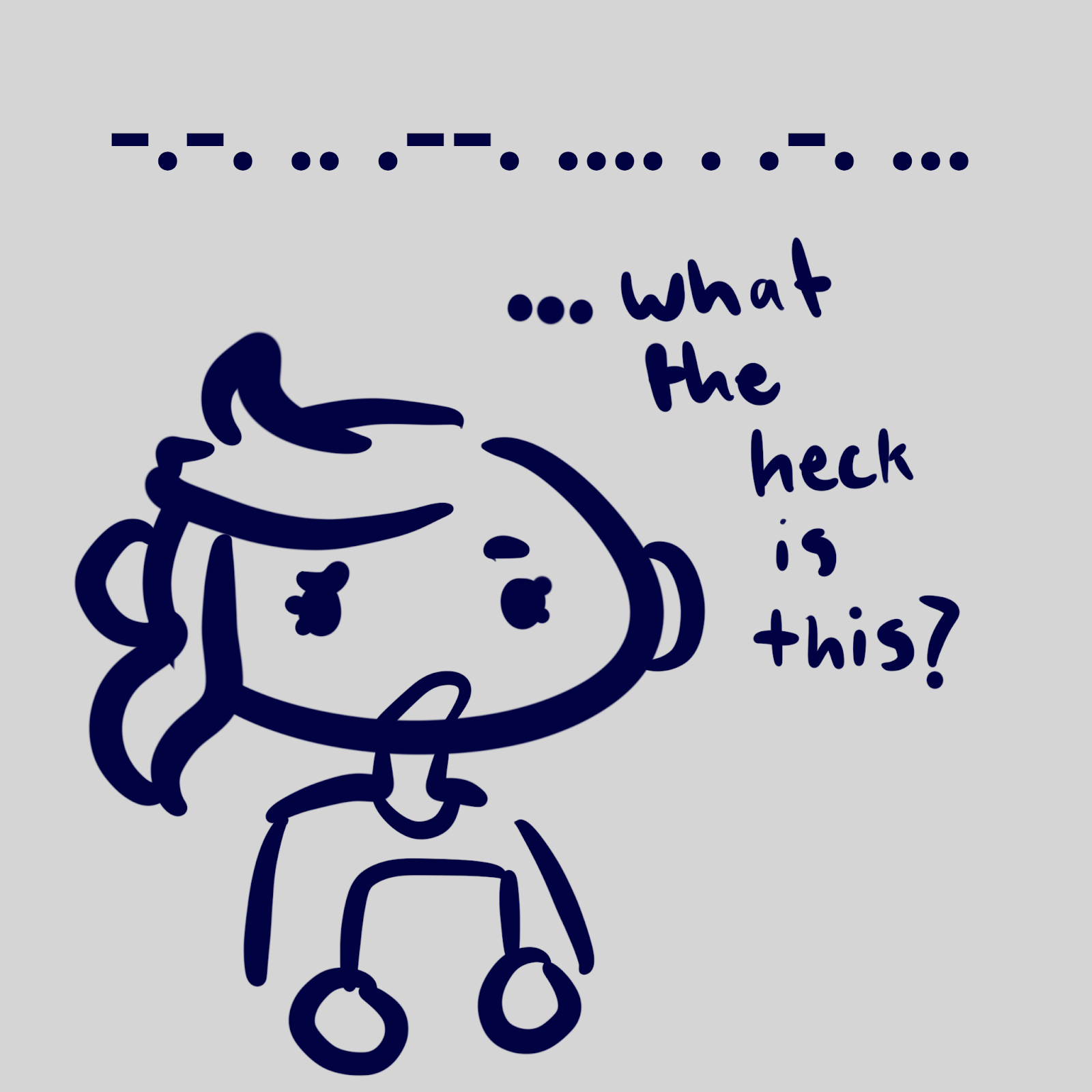
A cipher is a way of hiding or encoding text through various means. A good example would be Morse Code, a cipher made up from dots and dashes. You might recognize the famous S.O.S. or ‘save our souls’ code (… - - - …). There are many ciphers out there, so picking a specific cipher to use to represent your fictional language in text form is definitely an option if you want your audience to be able to potentially translate it. You can find simple copy/paste cipher tools online, or create your own cipher. You can also use symbols or numbers to substitute for letters and create a cipher that way.
If you’re using a visual medium or have a word limit, a more character heavy cipher like Morse Code is not recommended since it takes up a lot of space. As an example, let’s try my name, Solar: … / - - - / .-.. / .- / .-.
That’s a lot of space. Putting that into a comic strip could be a bit unwieldy.
Ultimately, depending on your audience and their investment, and how often you use ciphers and if you translate them or not, this option can be a fun way for your readers to crack the language code, or an annoying chore to copy and paste into a cipher solver to figure out what you mean. Still, what you find fun is the most important thing to consider.
Time for the big, complex stuff!
Conlang
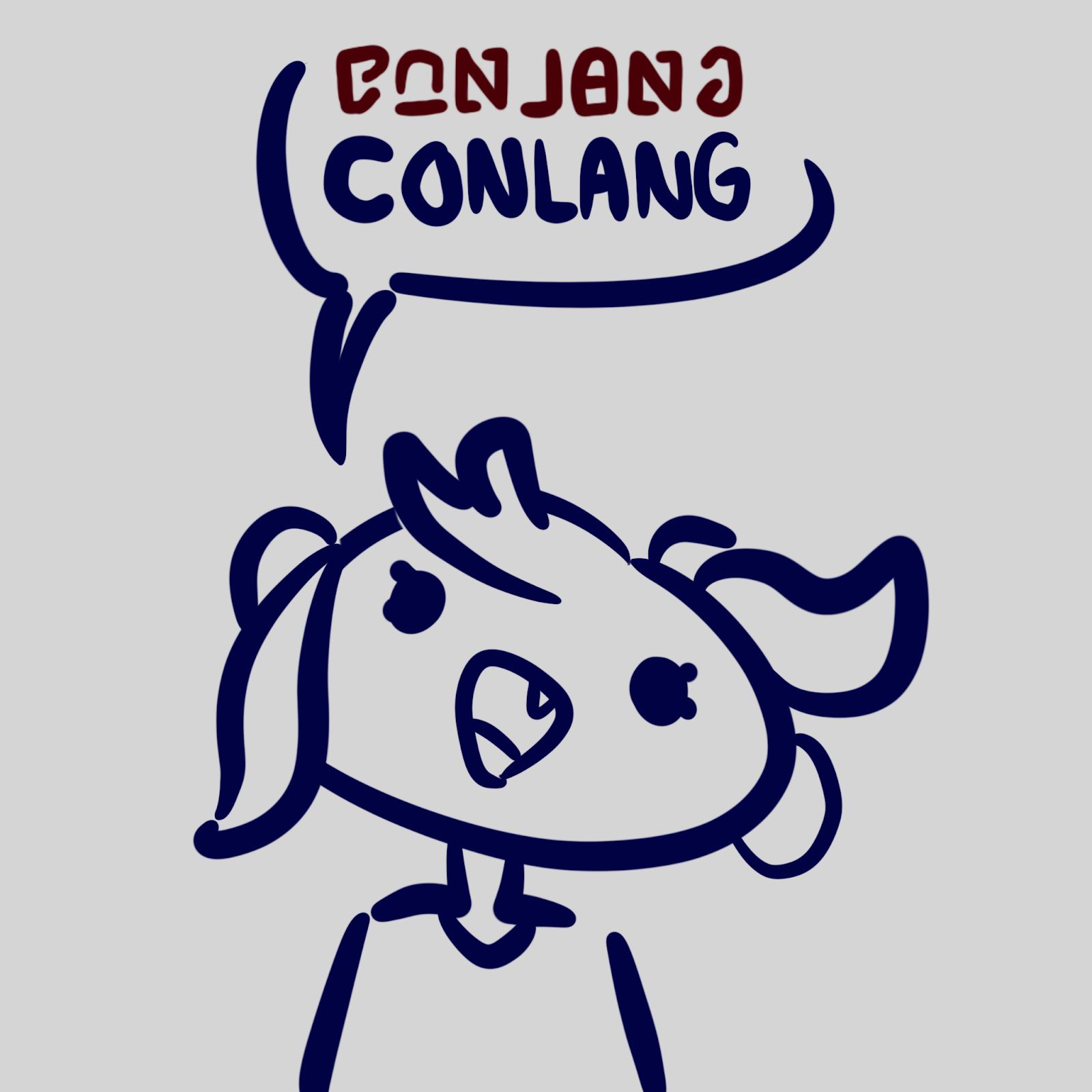
Finally, the crown of fictional languages: Conlang. A portmanteau of ‘constructed language’, conlangs are works of art in and of themselves. The most famous examples of conlangs are found in the works of the author Tolkien and the series Star Trek. Tolkien created:
- Quenya
- Sindarin
- Rohirric
- Westron
And more (if you’re interested, start your rabbit-hole journey here). Star Trek’s Klingon language has been learned and used by many Trekkies out in the real world.
Creating a conlang takes a fair amount of effort and interest in language, and unfortunately I’m not the right person to guide you in this effort. However, a friend of mine who is into conlang has recommended the book The Language Construction Kit by Mark Rosenfelder, which should start you on the right path.
Language Concepts and Ideas
Now that we’ve covered all the academic stuff, here are a few concepts for ways you could present languages in your worlds.
- A half verbal, half physical language with gestures built in to add nuance
- A psychic language that projects contextual images into the brains of the listener
- A solely signal-based language transmitted through electricity
- A language that appears as text in the air as you speak it

Try translating this!
Community Examples
Looking through the tag for conlang, there are a few users who have created languages with the most prominent being Voxxil!
- Ashralî, inspired by Japanese Hiragana and Georgian Mkhedruli.
- Sanzahgati, inspired by Ogham, Devanagari, and Arabic.
- Novio, a language stemming from Ashralî.
Check out these two users as well!
- IrisTheGreenF0x, who created the alien species Akarans.
- rynio, who created the language Zhwaidheh for their original story.
Thanks for reading! I can’t wait to see more of your original languages!