
Build a World from the Ground Up: Sci-Fi Planet Design
Want your world to feel truly immersive? Learn how to design a sci-fi planet for your OCs to live and thrive in.
Science fiction is a broad genre that can cover space adventures, the colonization of planets in and outside our solar system, and more! This article is for those unfamiliar with astronomy (or those who need a refresher) and can hopefully serve as a checklist, guide, or inspiration to those who want to create their own planets for their sci-fi stories.
If you want to share your sci-fi world (literal worlds too, of course), you’re welcome to leave a post in Unvale blog community! We here at Unvale would love to see your characters and hear about their sci-fi adventures!
Stars and the Solar System
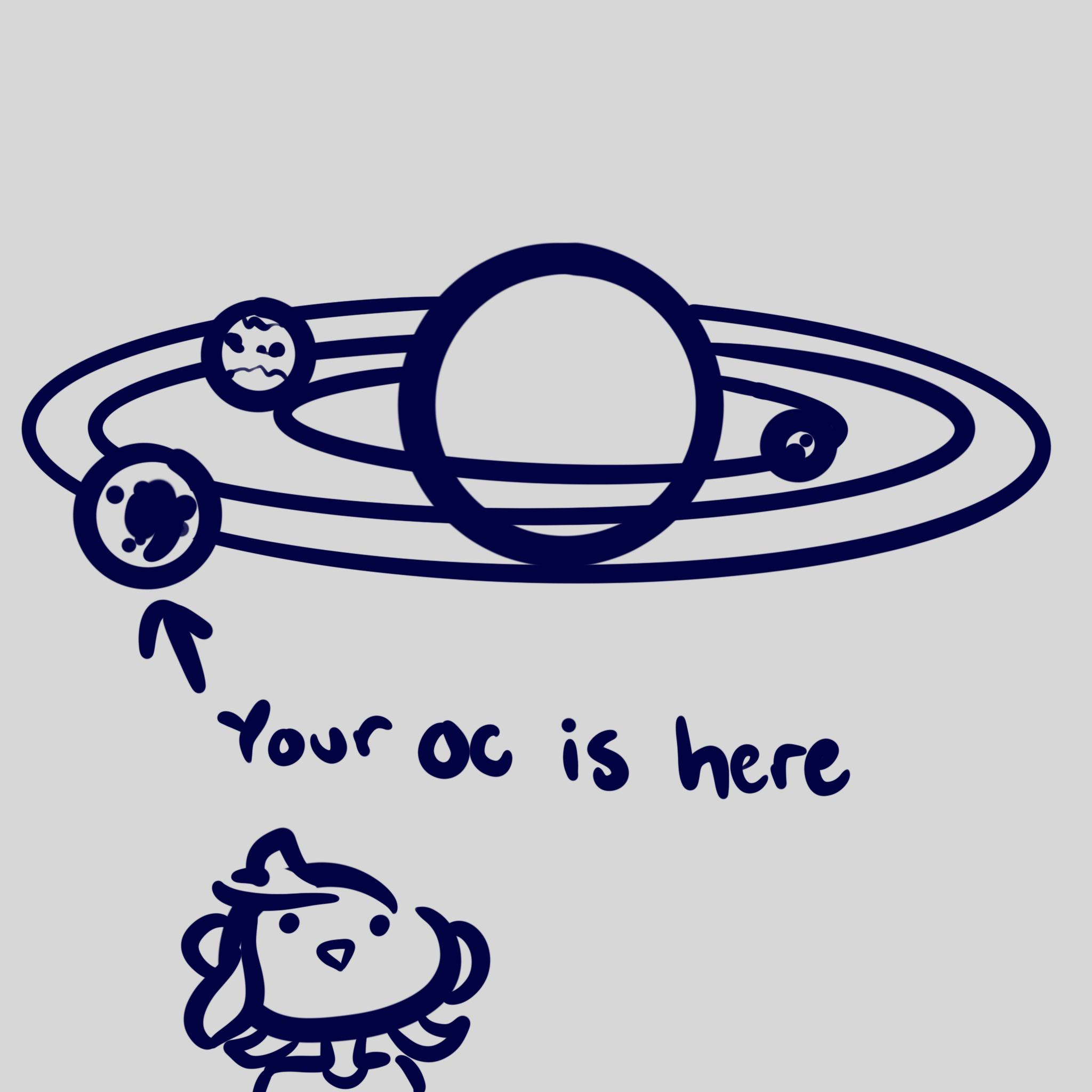
Let’s start with the center of any solar system, the star. Or, stars, if you choose to create a binary star system. Stars are huge and have their own gravitational pull, which causes celestial bodies to orbit around them, forming a solar system. They also have letter classifications based on their temperature; O, B, A, F, G, K, and M. The temperature of a star also affects its colour, with blue stars being hotter than red ones. There are a variety of star sizes, with the largest being the rare hypergiants, and the smallest size being brown dwarfs.
Besides deciding the size and colour of your planet’s sun, you should also decide its place in the solar system. The habitable zone, also known as the Goldilocks zone, is the area of orbit around the sun that’s best located to hold liquid water. If a planet is too close to the sun the greenhouse effect takes place in the planet’s atmosphere and any water evaporates (like Venus, for example). If a planet is too far from the sun the water freezes, like on Titan.
So, here are some questions for your planet:
- Where is the planet in relation to the sun?
- How long does it take to rotate around the sun? (How long is one year on your planet? 300 days? 657?)
- How long does it take to rotate? (How long is one day and night cycle.)
Your Planet’s Features
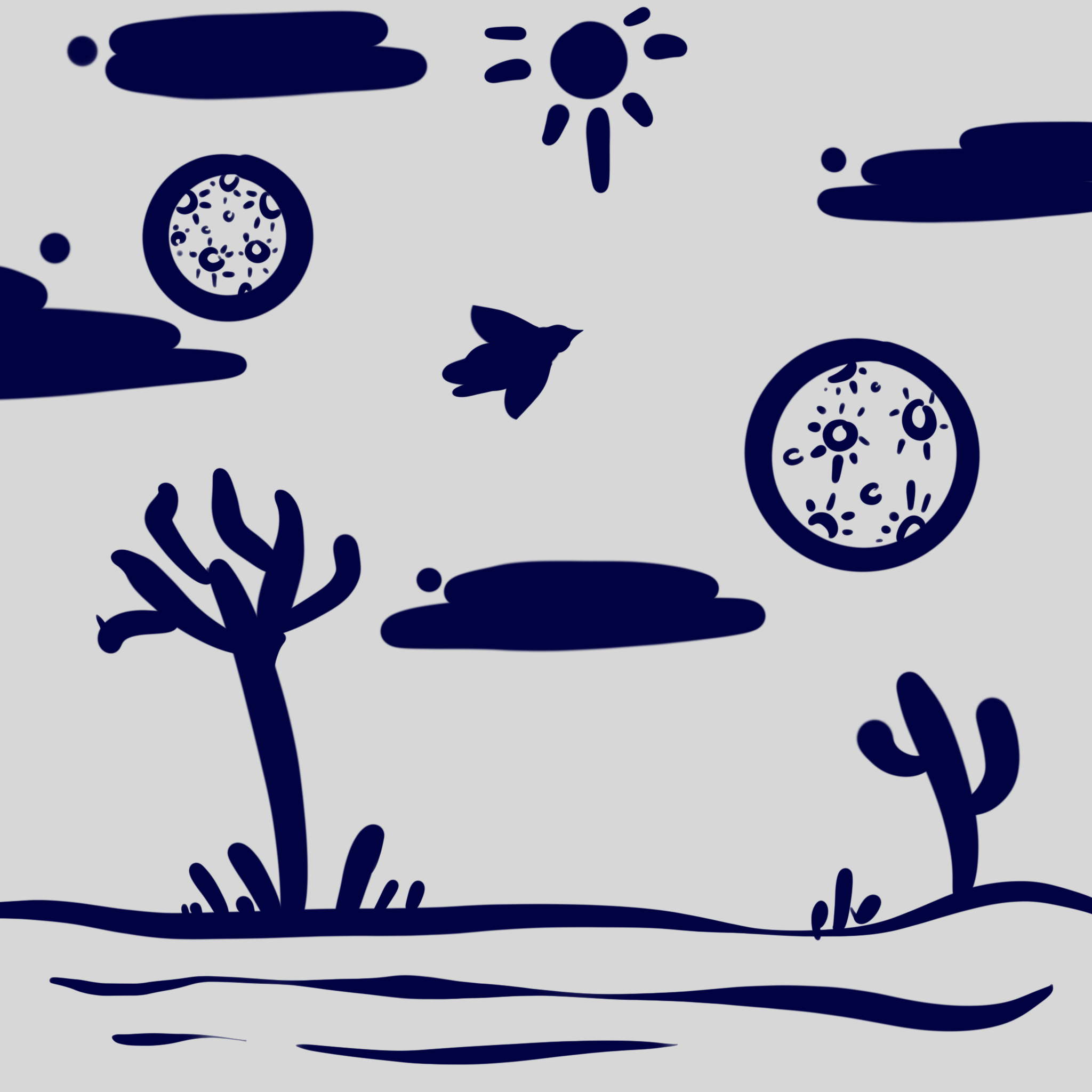
Like how a sun is orbited by planets, planets can capture their own celestial bodies into their orbits and create moons and natural satellites. Deciding how many (if any) moons your planet has and what they look like can be a fun exercise, and if your planet has intelligent life, the moon(s) can be an interesting cultural or religious icon for that species. Before you develop life though, it’s a good idea to think of what environments your planet has!
Here are some examples…
- Forests and jungles
- Prairies and savannas
- Deserts and volcanic plains
- Oceans, rivers, lakes and seas
You should also consider…
- What is the atmosphere of your planet made of, and how dense is it?
- What colour is your planet’s sky?
- How strong is the gravity of your planet?
- What is the most common metal or mineral found on your planet’s surface and in its crust?
Life Amongst the Stars
Once you have environments created, it’s time to imagine the plants and creatures that live there. If you need help or want to share, I’d always recommend the Species Builders community! But here are some questions to keep in mind when creating an ecosystem:
- How did your creatures and plants evolve?
- Why do they look a certain way?
Design a creature with their environment and survival in mind!
- Do your creatures use camouflage?
- Are your creatures able to use ink to escape, like an octopus or squid?
- Do your creatures fly or run away when faced with predators?
Every creature needs to eat, so…
- Are there plants or animals that survive off of sunlight?
- Is there fungus that recycles dead plants and animals?
- Are there herbivores that eat plants?
- Are there predators who eat herbivores?
If you have intelligent lifeforms…
- How do their cultures differ across environments?
- How do they interact with other creatures?
- Do they raise animals for their resources or as companions?
- How do they communicate with each other?
Thanks for reading!
If you want to read more sci-fi and world building articles, let us know by leaving a post in the Unvale blog community! Speaking of communities, here are a few you might find interesting…
- With Artfight upcoming, check out Unvale’s own Artfight community! If you don’t know who to draw for, you can find some new friends and incredible creators here.
- Happy pride month, Unvale! Join the Queer-Club community to celebrate and support queer artists and share your queer characters (or just hang out). Make sure to read the rules first, of course!
- If you want to draw for others but it isn’t Artfight season, check out ArtTrades!
- Participating in Kaijune? Subjectively has their own community, the Subjectivists! Join to see cool kaiju art.
- Calling all furries! Anthro-Club is the place for you! Check it out and support your fellow enthusiasts.
- Last but not least, DungeonsAndDragons is one of my favourite communities. If you’re a nerd like me, come join!