
Tips for Writing a Duo/Pair or Trio Dynamics in your Stories

Whether a duo or a trio, this article’s for you and your OCs!
When it comes to writing one on one dynamics with your OCs (or if you’re writing a trio, one on one on one), there are tons of different ways to go about it. You might have already read last week’s article on different kinds of relationships to write about when it comes to your OCs, and if you haven’t; well, what are you doing, go read it! That article covers some examples of kinds of relationships you can explore beyond the basic friends, enemies, and lovers.
This article will focus on tips for those looking to write relationship dynamics between two (or three!) characters. Whether you’re just starting out or brushing up on your skills, this article is for you!

Need some character writing tips? I’ve got you!
Tip 1: Character Development Scenes
When it comes to writing character relationship development scenes, as a rule of thumb, each scene should progress the relationship in some way. Even if it’s backwards progression through a misunderstanding or a reveal of a character’s lies, there always needs to be something that moves and shifts.
In reality, our relationships aren’t like that; we can simply enjoy each other’s company without changing the nature of our relationships. But when it comes to writing, the audience usually isn’t reading for these quiet moments, and you as a writer only have so much time to show off and explore your characters, so it’s important to use it well.
This isn’t to say you shouldn’t write cute scenes that don’t progress the relationship where your OCs enjoy each other's company, but if you’re writing a novel or TV show script, try to find ways to integrate these moments into their interactions throughout the text. That brings us to our next tip.
Tip 2: Showing off the Relationship
Integrate relationship dynamics throughout the text. You want to avoid the trap of expository dialogue as much as possible. For example, introducing your sibling characters by having them call each other “brother” or “sister” is an example of this, at least in the English language. If you have siblings, you can probably agree that you don’t go around referring to them by that relationship; you just use their names. Basically; show, don’t tell.
So, how do you go about showing a relationship without specific scenes or exposition? You might need to practice it a fair amount to get it right, but it all comes down to the little things. Some examples might include:
- If they are sitting around a campfire or table, do they sit together, or apart?
- If they’re out in public together, do they walk side by side or avoid being seen together entirely?
- Do they encourage and comfort each other when they struggle? Or do they tease each other, but ultimately offer a helping hand?
- If one wakes up before the other, do they help the other character prepare for the day by making breakfast or ironing their work uniform? Or maybe they just leave without a word?
- Do they put each other down, or build each other up when speaking to other characters?
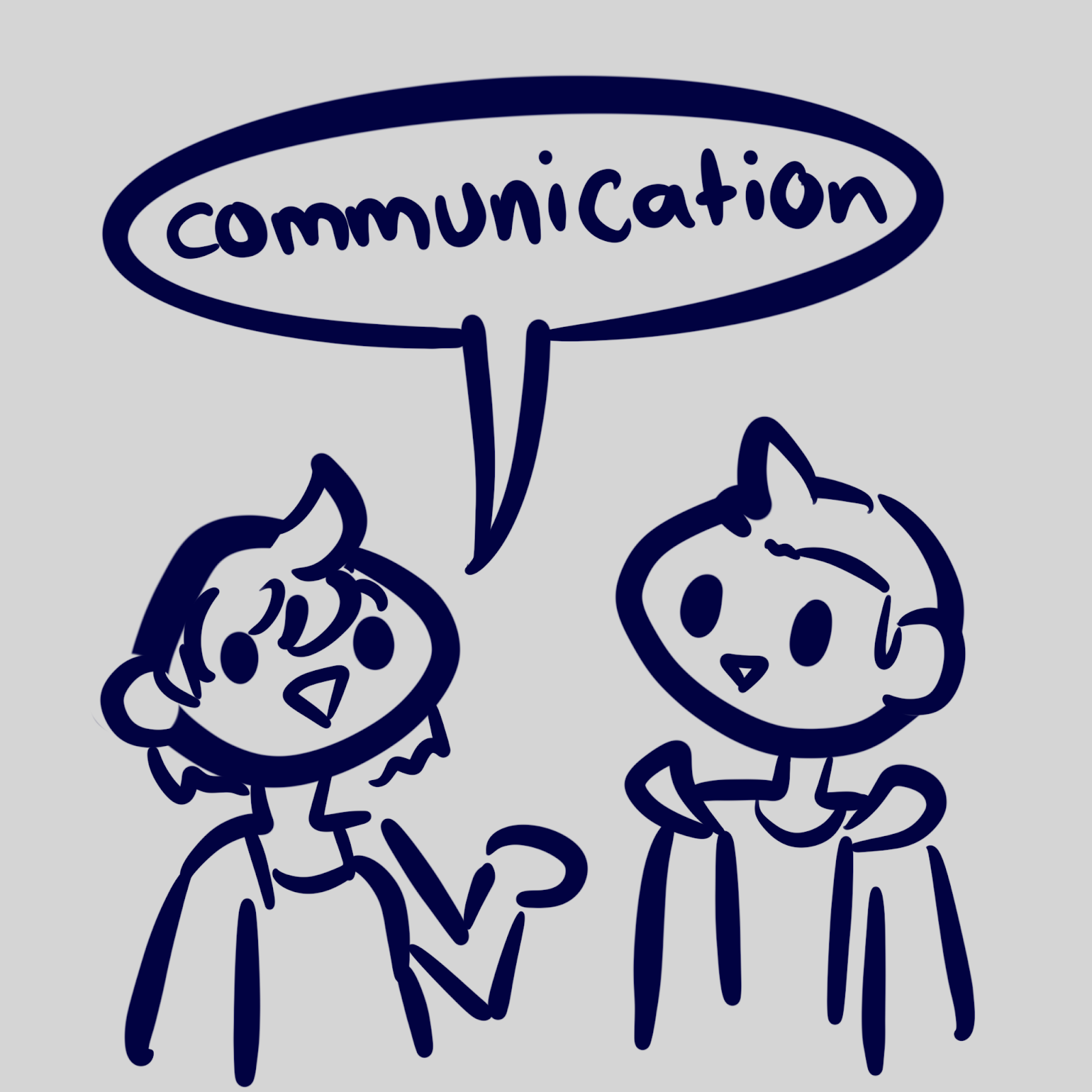
The key to a healthy relationship is to communicate.
Tip 3: Communicate (or Don’t!)
When it comes to relationships, communication is what makes or breaks them. If you want to show a healthy relationship, show respectful communication between your OCs (especially in cases where you want to have a functional throuple or polycule). This involves:
- Listening to the other character’s desires and feelings, and not belittling them even if they disagree or don’t understand.
- Asking questions to try and understand the other character’s position.
- Clearly communicating their own needs and wants, even if they’re ‘shameful’ emotions like envy or jealousy.
- Taking a mindset of “you and me against the problem” instead of “you vs. me”.
- Showing respect and appreciation to the other character in a way that makes that character feel appreciated and respected.
If any of these suggestions resonate with you personally, that’s because these tips are actually for real life relationships, platonic or not!
Now, if you want to set up a catastrophic, toxic disaster of a relationship, you can easily reverse all of the above suggestions on one or both sides of the relationship.
- Belittle and dismiss the other character’s feelings, worries and needs.
- Bottling up emotions and assuming that the other character can “figure it out” (or the dreaded, “you know why”).
- Fighting against each other rather than compromising or focusing on the actual problem, dragging up past resolved fights as ammunition.
- Showing ‘appreciation’ in a way that a character clearly doesn’t appreciate (such as murdering love rivals or harassing the character at their job).
You can show characters on a journey from having poor communication skills to having good ones instead of just a static relationship, if that’s the story you want to tell.

Thousands of people are waiting to read your stories!